
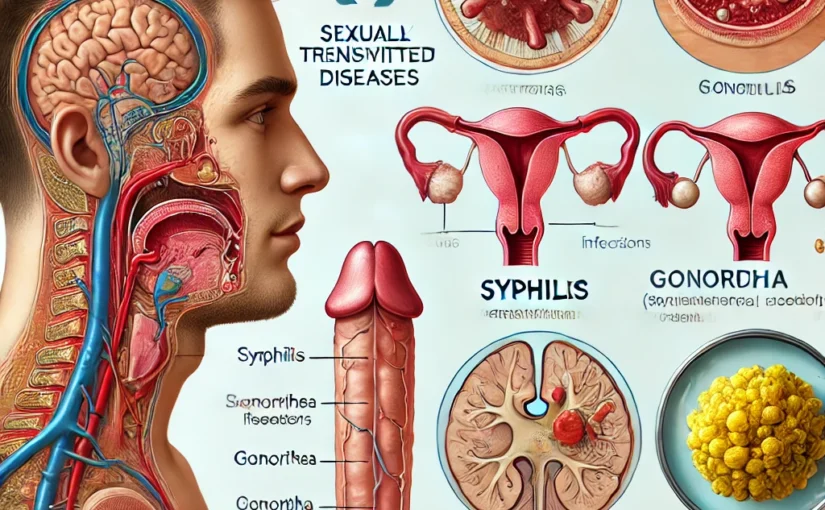
What are STDs?
Sexually Transmitted Diseases (STDs) are infections that spread through sexual contact, including vaginal, anal, and oral sex. Some STDs can also be transmitted through blood transfusions, shared needles, or from mother to child during childbirth. Among the most common bacterial STDs are Syphilis, Gonorrhea, and Chlamydia.
Syphilis
Syphilis is a bacterial infection caused by Treponema pallidum. It develops in stages and can lead to serious complications if left untreated.
Symptoms of Syphilis
Syphilis progresses through four stages:
- Primary Stage: Painless sores (chancres) on the genitals, anus, or mouth.
- Secondary Stage: Skin rashes, swollen lymph nodes, fever, and flu-like symptoms.
- Latent Stage: No visible symptoms but the bacteria remain in the body.
- Tertiary Stage: Severe damage to the heart, brain, nerves, and other organs.
Diagnosis and Treatment
Syphilis is diagnosed through blood tests or direct examination of sores. It is treated with antibiotics, primarily penicillin. Early treatment is crucial to prevent complications.
Gonorrhea
Gonorrhea is caused by Neisseria gonorrhoeae, a bacterium that infects mucous membranes, leading to symptoms in the genitals, rectum, and throat.
Symptoms of Gonorrhea
- Men: Painful urination, pus-like discharge from the penis, testicular pain.
- Women: Increased vaginal discharge, painful urination, bleeding between periods.
- Both sexes: Rectal discomfort, anal itching, and throat infections.
Diagnosis and Treatment
Gonorrhea is diagnosed through urine tests and swabs from affected areas. Treatment includes antibiotics, often ceftriaxone and azithromycin. However, antibiotic resistance is a growing concern, so early detection is essential.
Chlamydia
Chlamydia is a common STD caused by Chlamydia trachomatis bacteria. It often shows mild or no symptoms, making it a silent threat.
Symptoms of Chlamydia
- Men: Burning sensation during urination, discharge from the penis, testicular pain.
- Women: Abnormal vaginal discharge, painful urination, pelvic pain.
- Both sexes: Rectal pain, bleeding, or discharge if infected anally.
Diagnosis and Treatment
Chlamydia is diagnosed with urine tests or swab samples. It is easily treated with antibiotics such as azithromycin or doxycycline. If untreated, it can lead to infertility and pelvic inflammatory disease (PID) in women.
Prevention of STDs
- Practice Safe Sex: Use condoms correctly during all sexual activities.
- Regular Testing: Routine STD screenings help in early detection and treatment.
- Limit Sexual Partners: Reducing the number of partners lowers the risk of exposure.
- Vaccination: HPV and hepatitis B vaccines can prevent certain sexually transmitted infections.
- Avoid Sharing Needles: Reduces the risk of bloodborne infections.
When to See a Doctor
If you experience any symptoms of an STD or have had unprotected sex with a new or multiple partners, seek medical evaluation promptly. At Advanced Poly Clinic, our specialists provide confidential STD testing and treatment to ensure your sexual health and well-being.
Take Control of Your Sexual Health – Get Tested Today!
📞 01-4531078 or 01-4543386